
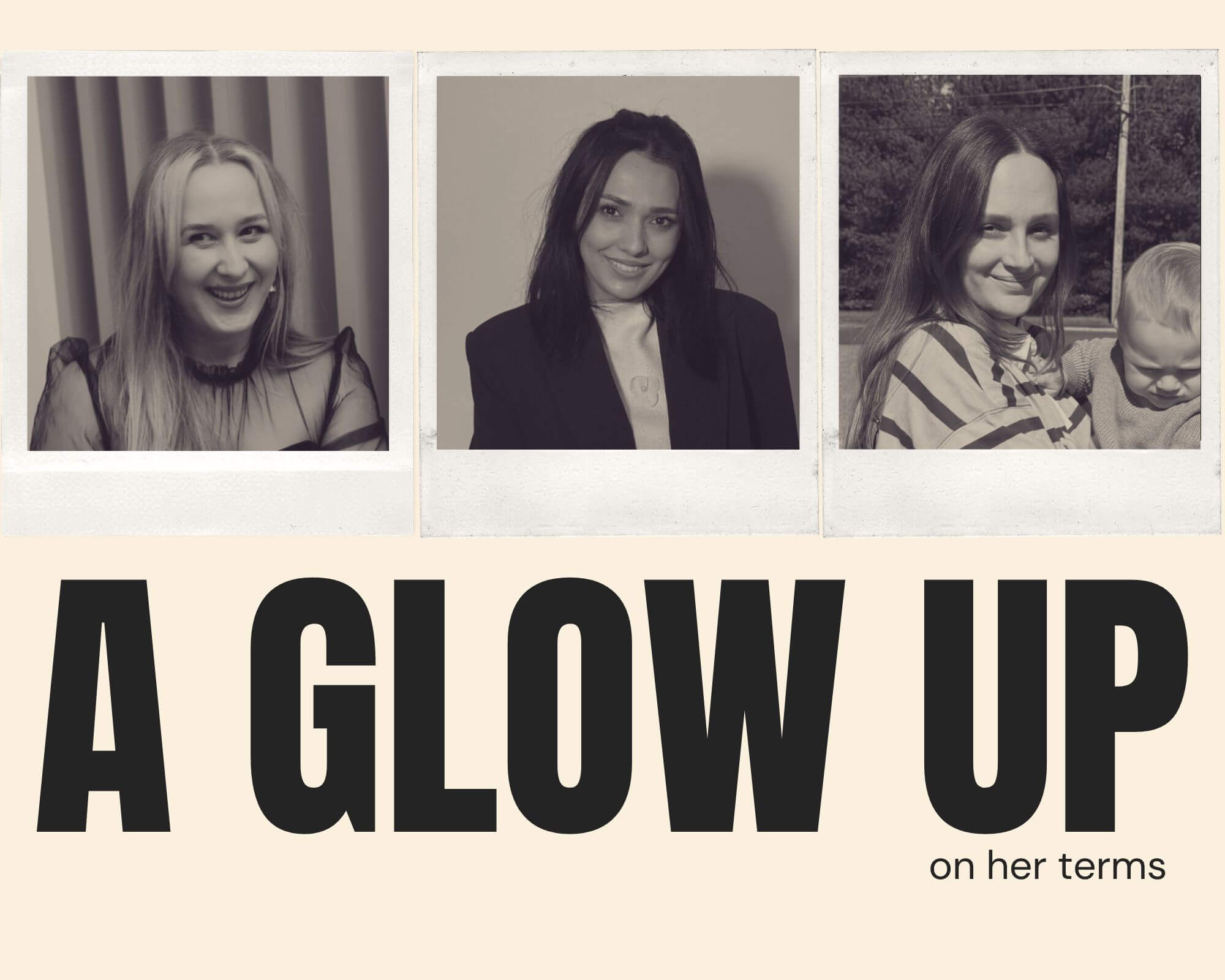
Read fully or skim:
Why Before and After Culture Pulls Us In

Anca, Founder of BBMCluj and Wellness Content Creator
“I think it works well because it’s fairly easy for everyone to find one part they identify with. We all have struggles, and seeing others succeed becomes inspirational, that ‘if she can do it, so can I’ mentality gets triggered. I think it’s part of our identity to look for role models to aspire to, and these before and after formats help us find people whose struggles resonate with our own. But they do tend to overlook the messy middle, the part where most of the actual growth happens.”
It’s remarkable how a single image pair, two rectangles stacked, a tidy “before” and a gleaming “after” can feel like a whole argument about life.
A quick, little narrative compressed into a thumb-scrolling beat. Before and after is the short story of the feed. Start low, end high, leave no loose threads.
And I keep wondering why that format lands so hard in a world that otherwise feels so resistant to tidy endings.
Maybe it’s the way before and after collapses time.
Teodora, Hair Artist Committed to Natural Beauty
“Before and after works because it’s simple and visual. People immediately understand transformation. But it can oversimplify the process. Behind every result there’s consultation, technique and care. It’s not just a dramatic change. For me, it’s about quality, balance and enhancing natural beauty, not just creating contrast.”

We are constantly fed processes elsewhere; long reads about habits, podcasts that dig into the slow spiral of change, but the before and after post does something different. It says, here is yesterday, here is today. No pages in between.
It’s a satisfying compression because it promises certainty. You don’t have to infer effort since effort is shown as result.
For people whose days are organized by dashboards and KPIs, that feels clean and measurable. It’s a piece of proof you can file away and, if you like, imitate.
But I also think there’s something deeper that before and after flatters, and that is our belief in control.

Emese, Marketer and Founder of Fabrics for the Family
“Everyone loves to see a shocking transformation, for better or for worse, it’s a diving board. It’s a great reminder that things can and will be changing. Representation of change, in this particular format works great if you’re willing to show the difference and even better, if you’re willing to dramatize it.”
I’ve worked with visuals and clients and deadlines enough to know how comforting a linear story can be.
The before and after says, implicitly, put in this work, follow these steps, and you’ll get that frame. It promises a kind of algorithmic fairness with effort in and outcome out.
In feeds built on optimization (likes, saves, shares etc), that kind of narrative is reassuring. It reassures us that life behaves like an analytics dashboard. And because we live much of our lives inside those dashboards, the reassurance circulates quickly.
The catch, though, is that most human change isn’t linear. Most human work is neither neat nor solo.
The before and after frame loves a jump cut while life prefers dissolve. Yet the jump cut is persuasive. It’s binary in a world of nuance.
Messy desk becomes clean desk, tired face becomes luminous glow, each pair subtly teaching a moral lesson.
“Before” reads as lack.
“After” reads as virtue.
The frame slips from aesthetic transformation to ethical signpost and then visibility equals improvement and improvement equals moral progress.
It’s subtle, but it’s schooling, “look, see what counts”.
Anca, Founder of BBMCluj and Wellness Content Creator
“I actually think it’s now the other way around. If you change too quickly, people assume you’ve ‘had some work done.’ If you lose weight these days, you’re accused of being on GLP-1 drugs. If you change your style too fast into a better one, all of a sudden, it’s most likely that a designer is dressing you, not yourself upgrading your style and knowledge. It’s definitely shifting toward promoting slow, natural transformation processes. It’s almost mandatory now to document the entire journey to ‘prove’ authenticity. The pressure isn’t to dramatize anymore, it’s to prove your results are real and achievable without shortcuts. It’s to show up as authentically as possible, and ideally, doing so imperfectly.”

What Gets Erased in the Jump Cut
I am uncomfortable with how often the costs of those transformations are left out of the frame.
When a photo shows a renovated room or a rebranded logo, the edit rarely includes the credit line: “with contractors, a loan, three months of unpaid evenings, and a cousin who’s a designer.”
What about the dramatic skincare “after”? The caption won’t usually say “with retouching and a two-hour studio session.”
Before and after stories tend to erase infrastructure, to make transformation look like a solo act when it was often networked and, frankly, expensive.
It’s not that the results aren’t real, they are; it’s that the narrative is partial. We see the effect and assume the cause is proportionate and personal, rather than distributed.

Emese, Marketer and Founder of Fabrics for the Family
“With so many tools at our fingertips it’s easy to think it will make things easier. It’s however about the harmonious, human touch that I think cannot yet be replicated. That doesn’t mean that’s what people want, it can be quickly enhanced busy work they’re after. Which is still fine, you just have to know to work with both kinds of expectations.”
I also notice how the “after” gets frozen as destiny.
Once a result is photographed and posted, it becomes a sealed moment that suggests permanence. But most “afters” are peaks or maintenance phases, and not at all finish lines.
The clean desk requires daily upkeep and the luminous face has a routine behind it and will tomorrow look different in other light.
The digital frame, though, loves to declare arrivals. It prefers a before and an after because those are scannable, and scannable is shareable. So the culture ends up freezing frames and calling them truths.
Making Change Without Making Ourselves Wrong
Let’s talk about the neutrality of the “before.” The format assumes that the “before” is something to escape.
But what if the before wasn’t broken, just different or simply not optimized for a video thumbnail? The assumption that our present is inadequate is corrosive. It teaches us to scan our own lives for defect, to measure ourselves against the possibility of a more polished frame. That can be useful when it leads to real improvements, but it can also make ordinary, messy living feel second-rate.
Anca, Founder of BBMCluj and Wellness Content Creator
“This is tricky, because ethics can look different to everyone. In my opinion, you need to be honest about your methods, but also transparent about the downsides and problems you face in the process. It’s important not to romanticize transformation or make it seem too easy or simplified, as that can create unrealistic expectations or even health risks for people who want to follow the same path. Authenticity means showing the struggle, not just the success.”

You can see the pressure that creates; algorithms rewarding contrast, I mean. A thumbnail that doesn’t scream “look at this dramatic change” will float by without traction. That incentive pushes creators toward exaggeration with more stylized staging and more explicit signage of “before = bad” and “after = better.”
Subtlety performs poorly and the middle is invisible. So we don’t document slow increments, we manufacture moments that read as leaps. We are less interested in the messy between because the platform won’t reward it.
And now add AI into the mix.
These days, a polished “after” can be achieved, at least visually, without months of labor. Tools smooth skin, remove clutter, adjust lighting, and even suggest better compositions.
The baseline of what counts as “after” has been raised. The consequence is twofold. Audiences grow impatient for dramatic results and creators escalate their staging to meet those expectations.
The arms race is subtle because the danger isn’t necessarily that people lie, but that the visual standard keeps ratcheting up. What was once notable becomes ordinary, and then inadequate.

Teodora, Hair Artist Committed to Natural Beauty
“With AI-enhanced visuals everywhere, expectations are higher and sometimes unrealistic. I choose not to dramatize. I focus on healthy hair, clean work and real results. What I post reflects reality. I prefer long-term beauty over viral impact.”
There’s a social dimension to all this I worry about. Before and after culture tends to be intensely individualistic.
It foregrounds a single person’s visible progress and presents it as replicable. That model sidelines networks of support like friends, family, hired help, community resources.
When transformations are showcased as solo victories, they erase how much of life is networked and that changes how we imagine community. If success looks like a polished frame achieved alone, there’s less incentive to build infrastructures of shared care and mutual aid because the frame doesn’t make them visible or valuable.
There’s also an ethical responsibility that I think creators tend to dodge. Before and after posts carry emotional side effects.
If the “before” is a category of embarrassment, viewers start to scan their own lives for defects. The format can create or amplify shame. Are we accountable for that? Maybe.
We could be more intentional about the narratives we post. A couple of possibilities come to mind. You could try naming the supports; lighting, edits, collaborators and show maintenance alongside the peak moments. I don’t mean these as formal disclaimers, I mean them as part of the story.
Say who helped, and what it actually took. Make the middle visible. Let the work look messy sometimes. That reintroduces complexity into a format that deliberately strips it away.
Even small gestures matter. When someone posts a kitchen “before” and “after” and also shares a short note, “we financed this with a small loan and three weekends of work, plus my neighbor helped with the cabinets,” it introduces nuance in the conversation.
This kind of honesty doesn’t kill inspiration. But it does complicate it a bit. It suggests that transformation can be both uplifting and communal, that the path matters as much as the arrival. It suggests we might value effort, not just outcomes.
If this is speaking to you, I’ll send the next one when it’s ready.
I’m not saying before and after content is inherently bad. I enjoy it. Sometimes it’s useful. It can teach a technique or give a quick boost of aesthetic joy.
But I do think we should notice what the format teaches us about worth. When worth is tied to the visibility of a result, we move away from deeper measures, like how we feel, whether relationships are steady, whether work is sustainable, whether there are moments of contentment that don’t photograph well.
The feed trains us to equate acceptability with polish. That narrows the range of what public life looks like and, in turn, what private life is supposed to be.
That narrowing has consequences. If clients expect jumps instead of slow growth, service providers will stage dramatic outcomes to meet expectations.
If people expect “after” states to be instantaneous because the algorithms reward speed, patience will turn unfashionable.
Simple everyday practices that sustain life, like catching up on sleep and keeping a neighborly rooftop plant alive, turn invisible and undervalued. We build a culture where quick, visible change is prized over slow, durable care. And that tilt influences markets and social norms, it influences what people invest in and who they’re willing to ask for help from.
I’m trying to say all this without sounding sanctimonious. I publish before and after content sometimes. I like seeing how a messy thing can be made better. I also find myself defensive when I see a “before” I recognize in my own life.
There’s a twinge, an itch to optimize. But I try to notice how that itch feels: Is it useful? Is it a creative spark? Or is it an implied humiliation? Sometimes the answer is both, and that’s worth attending to.
Teodora, Hair Artist Committed to Natural Beauty
“We have a responsibility to keep beauty real. Visible change should enhance, not create false standards. Filters can distort perception. My goal is refinement, not transformation into someone else. I want my clients to feel confident, elegant and naturally beautiful.”


Emese, Marketer and Founder of Fabrics for the Family
“I feel like the rules haven’t changed for being ethical, but they definitely have become more blurry. Staying rooted and honest in your work (and life) pays off in many ways. This should be a concern and a starting point of great work. The good news is that there’s so much to explore within this new visual era, that there’s no place for boredom. ”
I don’t have a tidy prescription. That would be the irony; another call to tidy up the mess of life into a before and after split.
I only have a kind of modest hope that if we become more attentive to what we’re teaching each other when we show transformation, we might also teach ourselves different values.
Maybe that looks like showing labor rather than erasing it. Maybe it’s a cultural move back toward networks, toward the everyday practices that don’t make good thumbnails but make life possible.
What fascinates me most is that these are small cultural habits with big(ger) effects. The way we photograph a desk or a face or a brand tells a story about who gets to be polished and who gets to be in progress without apology. It nudges markets and friendships and policies in small ways toward privatized fixes and away from shared infrastructures.
The before and after post is a kind of shorthand for aspiration; the trouble is what it abbreviates. What do we normalize when we only show the polished frames? What do we stop building because the feed rewards solo, instant, and shiny? It seems worth asking, and worth asking together.


