
What Good Packaging Really Does for a Brand Experience
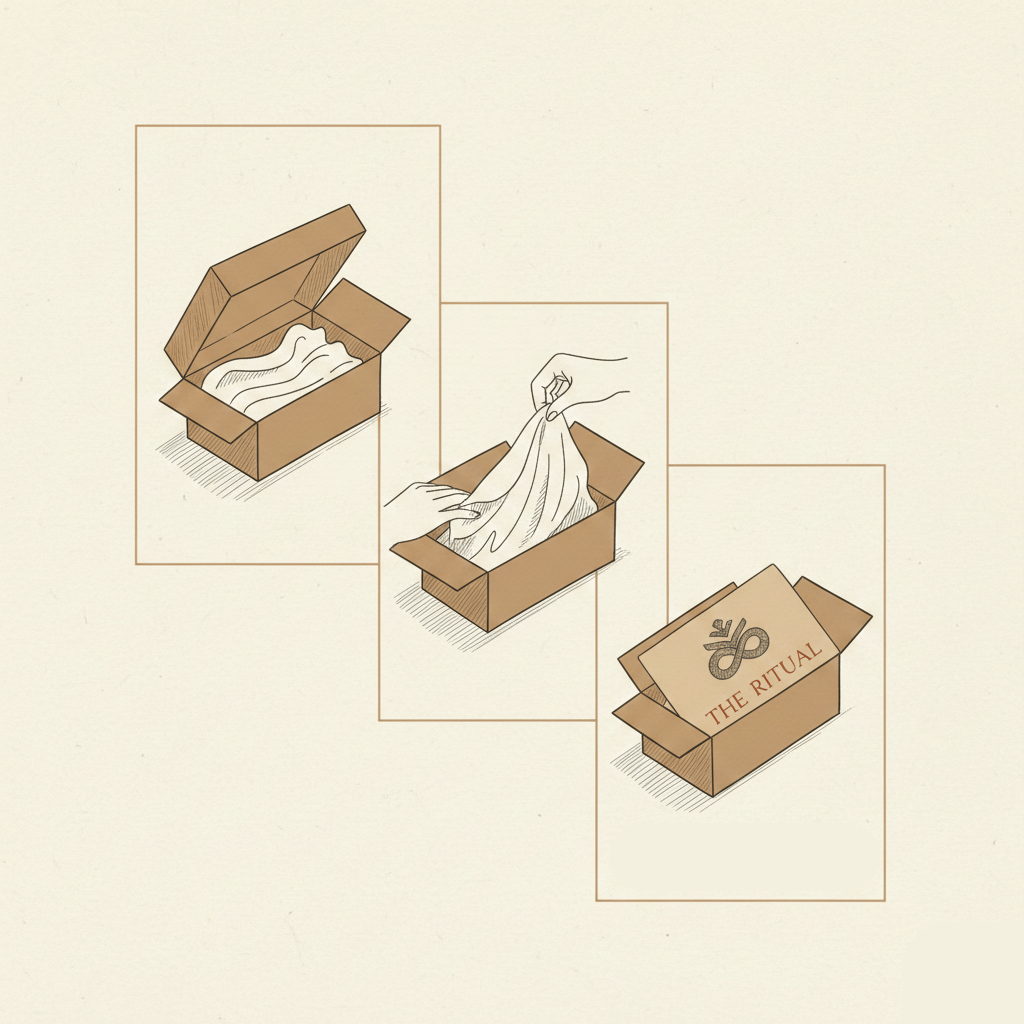
The box alone stopped me in my tracks. It wasn’t expensive, or from a brand I’d worshipped for years. It was a small candle from an indie maker I’d ordered on impulse. The box arrived in a plain brown mailer, nothing special at first glance. But when I slit it open, the inner flap had a single line — just three words — printed in a thin, warm serif: “Light the slow.” The tissue paper inside was stamped with a tiny constellation of dots. There was no long origin story, no founder’s manifesto, no overblown illustration of artisan hands. Yet in its simplicity, the care in the presentation spoke volumes about good packaging. Instead there was a small ritual from a folded card that asked me, politely, to pause for a breath before lighting the wick.

That little instruction changed how I handled the object. I set the box down, peeled the card open, and for a minute the whole act of receiving something felt like a tiny liturgy. Lighting the candle was no longer a transaction; it was a small appointment I’d made with myself. I don’t mean to be mystical about a cardboard box. But the packaging, what I’d come to think of as good packaging, had done something subtle; it offered me an invitation to behave differently. It suggested a story without telling it in overview or by bullet points. And that is what fascinates me, the way packaging can be a narrative device without being a narrator.
When people talk about brand storytelling, they often imagine an opening scene. The founder in a kitchen, a corporate poem printed on glued-in vellum. There’s certainly room for that kind of thing, and some brands wear it well. But I’m more interested in the subtle, implicit storytelling packaging can do; how the choice of paper, the way a label is folded, the microcopy on a pull-tab, or the rhythm of a box’s unboxing can all point back to a core idea. Good packaging, especially in thoughtful product packaging, is less like a billboard and more like a doorway.. It sets a mood, offers a movement, and suggests, without the heavy hand, what it might mean to own, use, or be near what’s inside.
Take materials. There’s an intuitive grammar there. A rough, deckled-edge paper reads as artisanal and patient. A cool matte-laminated carton says modern and controlled. A translucent paper sleeve invites curiosity and partial disclosure. Those are simple associations, but they can be surprisingly precise when aligned with a brand’s intention. If your brand’s core idea is “carefully restrained luxury,” a featherweight textured wrapper with restrained typography can whisper that idea across the moment when the customer’s fingers first touch the package. If the idea is “democratic joy,” maybe the box is a bright, playful construction made from recycled board, printed with a typeface that looks like someone hand-lettered it two minutes before sunrise.
Structure matters just as much as material. Packaging can choreograph the moment of discovery, shaping the entire packaging experience without ever announcing itself. You can make people find things, not merely receive them. A box that opens like the pages of a book, revealing layers in a deliberate order, becomes an unfolding narrative, a pattern that shows up again and again in some of the strongest packaging work this year.
A nested set of envelopes, each with a small, relevant instruction, sets a pace. You’ve seen this in modern tech packaging; the top layer lifts effortlessly, the device appears like a prize, and Apple’s designers understood early that the unboxing ritual is part of the product’s identity. But what’s interesting is that any brand, from a baker to a perfume house, can borrow that choreography. An onboarding ritual doesn’t need a six-figure design budget; it needs imagination and a sense of sequence, a clear idea of what you want someone to feel before they ever read a product review or slide into the app.
Typography and copy tone are where the story voice truly shows up. Typography is not merely decorative. Typeface choice, point size, line length, and the way you break text into fragments communicate temperament. I like to think of it as the brand’s speaking voice in physical form. A bold sans-serif in generous tracking is brisk and confident. A soft serif with narrow columns reads like a friend who speaks slowly and chooses words with care. And then there’s microcopy, those tiny editorial decisions that live on the inside flap or the pull-tab. “Open on Tuesday,” “Breathe here,” “Peel gently.” Resources such as branding manuals and style guides
can provide a framework for designing with care and coherence, helping teams avoid these pitfalls. They are where humor can disarm and where a brand can hint at its values without a mission statement.
All that said, the trick is coherence. Everything should point back to the same center. Color, feel, typography, scent, structure, the tone of the copy, they should form a chorus rather than a jumble. Too often brands treat the box as an afterthought. Someone designs a logo in isolation, another person chooses a stock texture, and someone else writes the copy, and then marketing asks for assets for the e-commerce page and the result is casserole-branding. A lot of ingredients without a recipe. When every choice echoes the brand’s core idea, the packaging becomes persuasive in a way that feels inevitable and honest.
Good Packaging in a Digital-First World

There is, though, another layer to consider since we do live in a digital-first economy. Most of a brand’s first impressions are happening on a screen. A person scrolls past an image of your product, reads a five-line title, and decides whether to click. The physical object rarely has the chance to make the first whisper anymore. Packaging used to be the principal storyteller at the retail shelf; now it is an actor among many in a hybrid theater. That matters, but not for the reasons you might expect.
No one is saying you should plaster keywords across your label like an Amazon listing from 2008. That would be awful, and it betrays what good packaging is. But we also can’t pretend that the words on a box, especially in contemporary product packaging, live only in the tactile moment of opening. The text you print carefully, the phrasing you choose for that inside flap, the way you describe a scent, the verbs you favor, will be copy-pasted into product descriptions, echoed in unboxing videos, quoted in headlines, and turned into metadata across e-commerce platforms. In other words, those words will be translated into digital context where search engines and human readers meet. Packaging copy is thus low-key SEO. It’s not about stuffing keywords; it’s about choosing language that reflects how real people talk about the product category and the problems they’re trying to solve.
This is where craft and strategy meet awkwardly, and where I confess to being a little surprised at myself for caring so much about search. I grew up romanticizing physical materials, the whisper of paper, the smell of ink. Yet I’ve had to learn, somewhat grudgingly, that the phrases you favor matter online. People are lazy about search, they use shorthand, they ask questions, they look for phrases that feel conversational. So it pays to Google your own metaphors. See how people talk about “hydrating serums” or “morning ritual candles” or “slow-baked sourdough.” See what questions surface in searches and what words people actually type into bars at the top of their browsers. Then use that natural language in your tone subtly, not clunkily. If searches show that people ask “what candle helps me sleep,” you might incorporate phrasing on the box like “designed to help you fall asleep” rather than more scrubbed, marketing-speak like “promotes nocturnal relaxation.” You can be discoverable without being a billboard.

What fascinates me is how this small act, matching the brand’s microcopy to the language of search, reflects a larger shift in how we live and relate. We are living in a culture where signals travel outward and backward. A beautiful package on your doorstep can become an Instagram reel that then influences Google’s understanding of how people discuss your product category, and that understanding loops back into how new buyers find you. Packaging is a node in a network. The box you send a customer is both an end and a beginning. An intimate object in one moment, and a public signal in the next.
There is an ethical dimension here, too, that I think is worth attending to, a theme I explore further in a piece about the monetized self-care trend. We talk a lot about sustainability as a checkbox — recycled materials, compostable inks — which are important. But good packaging can also be a moral stance about attention and care. In a world that moves fast, a package can be an argument for slowness. A brand that designs a thoughtful unboxing ritual suggests that time with this product will be different; it is an act of claiming space in a frenetic life.
This claim can feel small, maybe even trivial. But small rituals accumulate. I’m not romanticizing consumerism, but I do think there’s a kind of awe-invoking potential in ordinary objects. When a package asks you to breathe, to read a line, to fold something back into itself and keep it for a later use, it is asking you to perform an act of attention. That attention is not, strictly speaking, spiritual, but it can be, and sometimes the line between the two is porous. I think we seek, in a diffuse way, for these tiny anchors. We’ve grown distrustful of grand narratives, of the big promises. A small, honest invitation — “brew this tea and sit for five minutes” — can be more compelling than a manifesto.
Brands that sense this have started to design packaging that doubles as a tool for meaning-making. Think of a tea tin that includes a small, folded note with a question to ponder while steeping. Or a shoe box that has a perforated card with instructions for repairing the sole, a literal invitation to prolong the object’s life. These are design choices that embed values into the act of consumption. They’re not preachy, they’re practical and suggestive. They turn product use into a tiny practice.
Not everything needs to promise transcendence. Some of my favorite microcopy reads like a friend who knows the limits of their own claims: “May help some people sleep,” “Not a substitute for a good night’s rest,” “We’ll try our best.” This kind of tone is oddly refreshing. It admits uncertainty, and in doing so gains trust. It feels human. And in a culture saturated with overconfidence, a little doubt can be a radical act of authenticity. Clarity and explanation soften fear and invite people into shared understanding, even in places we’re used to treating as purely transactional.
If this feels like the kind of space you want more of, you’re welcome here.
I’m mindful, too, of how packaging can be generous. The generosity I mean isn’t always about free things. It can be a generous gesture in how information is given: clear instructions, transparent ingredient lists, a QR code that leads to usage videos without requiring an account, or a thoughtful return policy printed inside the box, in plain language. These are design choices that honor the customer as someone with time and needs. They reject the manipulative gestures of hidden add-ons and obscure terms. There’s a kind of ethical grammar to generosity that packaging can make visible.
In the digital-first context, that generosity is also strategic. Brands that make it easy for customers to talk about them by including a suggested hashtag on a small tag, or an idea for a creative use written on the inside lid, are almost inviting the translation from tactile to social. But there’s a line between invitation and orchestration. The best invitations feel optional and delightful, not transactional. A tiny card that says, “If you liked this, tell your neighbor” is different from a demand: “Share this with five friends for a free gift.” The former respects human agency, the latter commodifies it.
Let’s talk about the need to be both distinct and discoverable. Distinctive packaging can be arresting, it can make someone stop the scroll. But sometimes being distinctive makes you hard to find. A label that leans into poetic idiosyncrasy may be beautiful, yet the phrasing might not align with what people search for when they’re trying to solve a problem. So there’s an art to being both surprising and speakable. That’s where the SEO sensibility comes in, not as a grubby compromise but as a design parameter. Choose language that both reflects your voice and maps onto the language of your customers. It feels, honestly, like learning a new form of empathy, you learn to inhabit someone else’s search bar without losing your own accent.
This is why testing language is such an underrated act of craft. Try different microcopy and see which phrases get used in reviews and social posts. See what words customers echo back when they describe your product in the wild. Packaging can be a laboratory for voice. When something on a label resonates, it gets amplified; when it doesn’t, it quietly disappears. And because packaging’s words often migrate online, those echoes feed back into discoverability. The process feels less like marketing and more like listening. In a way, it’s the same instinct that shows up whenever we slow a conversation down long enough for evidence to show up, rather than letting confidence alone carry the day.
Where Good Packaging Becomes a Form of Care

There’s another thing packaging can do that has been on my mind; it can offer a place to pause for gratitude, or at least to invite reflection. I’ve seen boxes that include a short line, not long or didactic, about the people who made the product or the source of its materials. Not a long corporate history, just a line: “Made near the Elbe by three people named Marta, José, and Kofi.” That line humanizes the object. It doesn’t solve systemic issues of labor or supply chains, but it gestures toward a relational world in which objects are not anonymous. In that gesture there is a recognition that things have provenance and that people are involved. It can be small, almost ceremonial, but it matters.
So what do we do with all this? How do we act if we care about telling a brand’s story through packaging? For one, we stop treating the box as an afterthought. We imagine the unboxing as a scene and choreograph the moment. We choose materials that speak the temperament we intend. We use typography and microcopy as a voice. We design a sequence so that discovery is paced and meaningful. And we remember that what we place on the physical surface doesn’t stay there, it migrates into the digital environment where people search, compare, and decide. We learn the language our customers use without sacrificing our own personality. We allow doubt and generosity to be part of the voice.
Reflecting on it more widely, packaging’s little dramaturgies seem to me a tiny mirror of larger cultural changes. We’re a people living in the middle distance between the material and the digital, between speed and a hunger for meaning. Packaging occupies that liminal space. It is a way to practice a kind of attentiveness that doesn’t demand grand sacrifices. It’s a place where a brand can say, in its small way, that it cares about how you will feel when you hold the object in your hands. That caring may be market-savvy, yes, but it can also be human.
There is also a question here about what it means to be remembered. In a culture where impressions are atomized and attention is rented, packaging can be an artifact that lasts. Someone keeps a box because the typography was beautiful, or because the fold revealed a line of copy that mattered on a particular day. Materials and words can outlast an ad campaign. They can become little repositories of memory. If brands think about that, they might design less for the immediate sale and more for the lingering.

I’m aware, too, that this post might sound like a call to design for the self alone, to make everything feel intimate and precious. That can and should be balanced with responsibility. Packaging that celebrates slowness while being wasteful is hypocrisy. Packaging that invites ritual while obscuring labor is disingenuous. But I don’t think those contradictions are reasons to give up. They’re reasons to be thoughtful. To be generous. To let packaging be the place where the promises you make in your copy are actually plausible in the world.
I sometimes imagine a world where small, well-designed acts accumulate into something like a culture of attention. Where the choice to pause before lighting a candle becomes a social practice. That’s perhaps fanciful. I might be wrong. But when I open a package and find a line that asks me to breathe, I find myself doing it. And when many people do that tiny thing, something shifts. We might become, collectively, a little less hurried, a little more apt to notice.
So if you are thinking about packaging, think about the story you want to perform, not the story you want to tell. Consider the gestures you can design into the object; an inner flap that suggests a ritual, a fold that reveals a single evocative line, a texture that insists on careful handling. Think about the phrases that will migrate into the digital world and test them against the language people use. Be generous with information, and humble with claims. Choose coherence over complexity. And remember that small invitations, a line of copy, a fold, a scent, can be more persuasive than any long-form history.
Treat good packaging as a practice in attention, as a way to invite behavior. It’s a place where design meets language, and where the physical meets the searchable.
We are still learning what it means to live with objects that speak both personally and widely. How we let them speak and what words we give them, and how honestly we make them, and how we ask people to receive them might be one small way to shape how we inhabit a world that is half-screen, half-hand. Does that matter beyond commerce? I think it might. But I’m also willing to be surprised.