
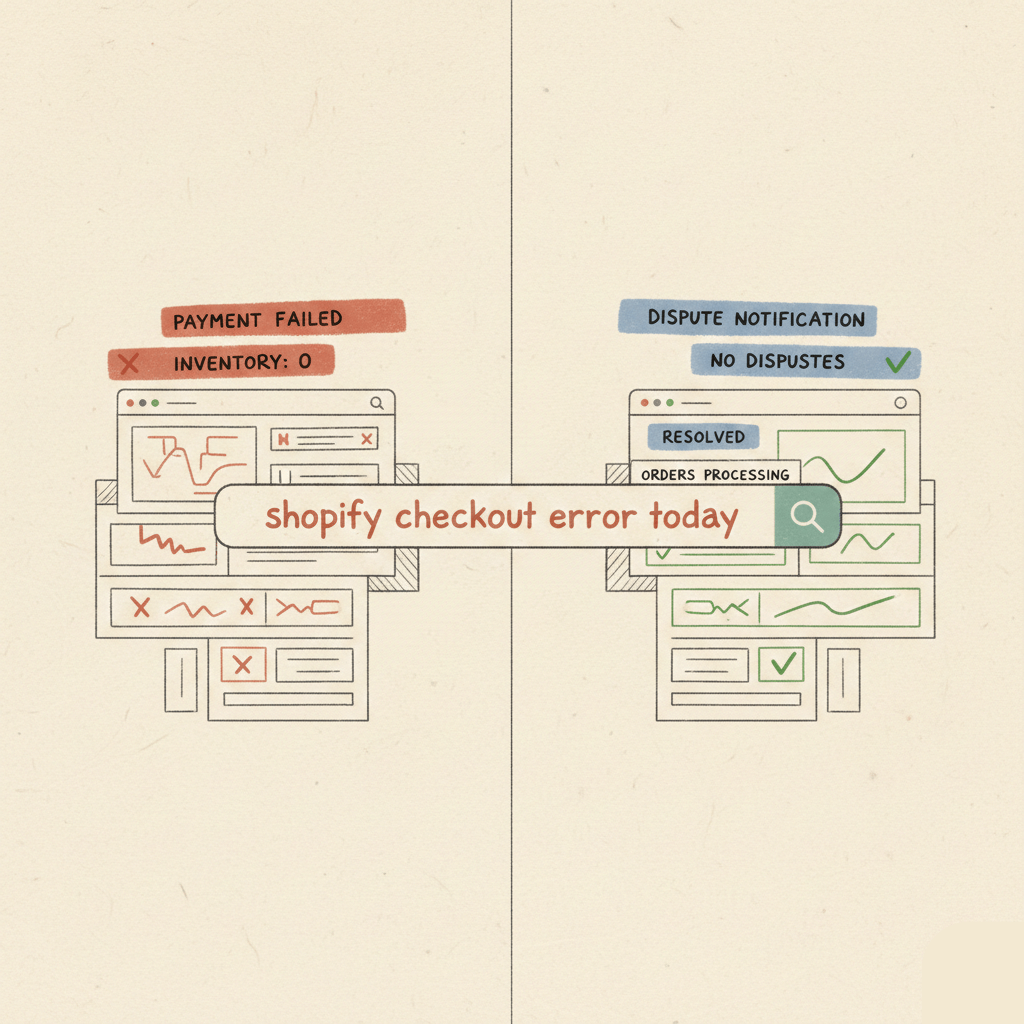
We know SEO to usually be a long-term play. You earn visibility by earning trust. That’s steady content, helpful answers, good UX.
But what happens when urgency hits? When your customer is stressed, not curious? Who’s the authority on that kind of content and keywords?
You can be, but keep in mind, the rules shift.
That’s where fear-based marketing reframes SEO. Suddenly, it’s not about visibility over months, but about action in minutes.
So, what changes?
Instead of optimizing for interest, you’re optimizing for immediate need. Your audience isn’t casually comparing products.
They’re panicked because a package hasn’t arrived, their Shopify store was flagged, or their POS system crashed.
And your content needs to meet them exactly there.
SEO for Urgency in Practice
For small businesses and eCommerce, the “fear moment” often revolves around risk to income, trust, or operations. Naturally, the keywords shift too.
Hyper-specific, pain-based searches
“Shopify site down fix now,”
“how to refund Etsy customer fast,”
“Stripe dispute help,”
Put all yours on a list.
Emotive modifiers
Terms like “urgent,” “emergency,” “last-minute,” “unexpected,” or “problem” boost CTRs when used strategically in meta titles and headers.
Crisis-centered content
Blog posts like:
- “7 Signs Your Inventory Software Is Losing You Sales”
- “Why Your Checkout Page Might Be Killing Conversions”
- “How to Respond When a Customer Accuses You of a Scam”
These aren’t scare tactics. They’re uncomfortable, real-life scenarios that need to be addressed operationally and in your content. You’re telling the customer, “We’ve seen this before. Here’s what to do.”
This is where fear-based marketing ads also get their legs. Emotion meet solution.
Walking the Line of Urgency Without Exploitation
Fear marketing walks a tightrope, and in small business communities, trust spreads fast. Betray it, and you’re out.
Learn how to stay on the ethical side of the line.
Cite your sources
Link to real tools, merchant policies, Shopify/Etsy support docs, or expert insights. If you’re naming a risk, back it up.
Give clear solutions
Don’t just spotlight the problem. Every piece should end with action. “Here’s the setting to check,” or “Here’s the free script to use in your refund email.”
Keep the tone grounded
You’re not the clickbait merchant yelling “Your store is doomed!” You’re the calm partner saying, “Hey, this happens. Let’s fix it fast.”
Fear can motivate if and only if it’s anchored in helpfulness.
Measuring What Works (and What Doesn’t)
This isn’t gut-feel SEO. You need to know what’s landing and what’s not. A lot of business owners ask how do you know if SEO is working especially when urgency is in the mix.
Here’s what I rely on:
- Search Console
I watch urgent keywords like “Shopify checkout error today” or “angry Etsy customer message.” CTR spikes after headline tweaks? That’s a signal. - GA Behavior Flow
Did the reader bounce, or did they keep scrolling to find the fix? Panic leads to action if the content delivers. - Heatmaps
Are people hovering over the “refund” section? Clicking into related guides? That’s insight into what fear they’re navigating. - Rank trackers
If “prevent chargebacks Shopify” climbs after a rewrite, the emotional framing is working. And that’s one way to check if SEO is working. - SERP reviews
If your competitors are calm and you sound like an alarm bell, tone it down. Match urgency to the moment, not past it.
SEO Feeds Paid Ads (Especially in Crisis Moments)
In a crunch, your SEO becomes your best intel for paid strategy. It’s your stealth market research engine.
Search queries = customer anxiety
See a spike in “USPS tracking not updating”? That’s your ad hook.
Top-performing blog headlines
Posts like “What to Do When Your Product Goes Viral and You’re Out of Stock” become excellent Facebook or Google ad copy.
Pages with high time-on-page but no conversion?
That’s a retargeting opportunity. “Still dealing with returns confusion? Here’s a checklist.”
Use your content to listen and your ads to respond. Ground these ads in fear-based marketing that’s real, not fabricated (= nobody even has the issue) or manipulative (= everybody has the issue all the time).
When to Use Fear-Based SEO (And When Not To)
This isn’t an everyday strategy. Online audiences can smell manipulation, and too much urgency just leads to fatigue.
I recommend this approach 10–15% of the time, especially:
- When launching products that are tricky to set up or hard to deliver on time.
(e.g. “Pre-orders close Friday – don’t get left in the dark again.”) - In seasonal spikes like BFCM, tax season, or shipping deadlines.
- When troubleshooting or recovery is part of your product.
(“Fix failed payments fast” or “Recover from a chargeback in 3 steps.”)
Can This Work in Lighter Moments?
Actually… yes.
You can use the same mechanics, just change the mood.
- Emotional copy? Yes, but swap fear for aspiration. “Don’t miss out” instead of “Don’t screw up.”
- High-intent queries? Still gold. Just shift from anxiety to delight: “How to surprise customers with handwritten notes.”
- Urgency tactics? Absolutely. But framed as opportunity: “Only 48 hours left to wow your holiday shoppers.”
Fear-based SEO is about identifying what matters most right now and helping your customer solve it. Whether they’re sweating… or smiling.