
AI in Content Marketing Feels Like a Free Advantage (At First)
You keep telling yourself this is just a tool, and maybe that is true in the narrowest sense.
AI in content marketing is undeniably useful as it make a small team look larger and a tired team look nimble.
It’s why it feels so irresistible online right now. It offers relief from the grind. It promises to take the dull edges off marketing work, to make the machine cheaper and faster.
And for a while, that will be enough to seduce almost everyone.
If the model can write the first draft, why wouldn’t you let it? If it can help with outlines, headlines, repurposing, summaries, keyword clusters, FAQ pages, social snippets, why wouldn’t you use it there too?
It is hard to resist something that appears to save time without immediately asking for much in return. The first few wins feel almost embarrassingly easy. Output goes up and your calendar opens up. Your team breathes a little.
But then, inevitably, you notice the bigger changes.
When Your Content Starts Sounding Like Everyone Else
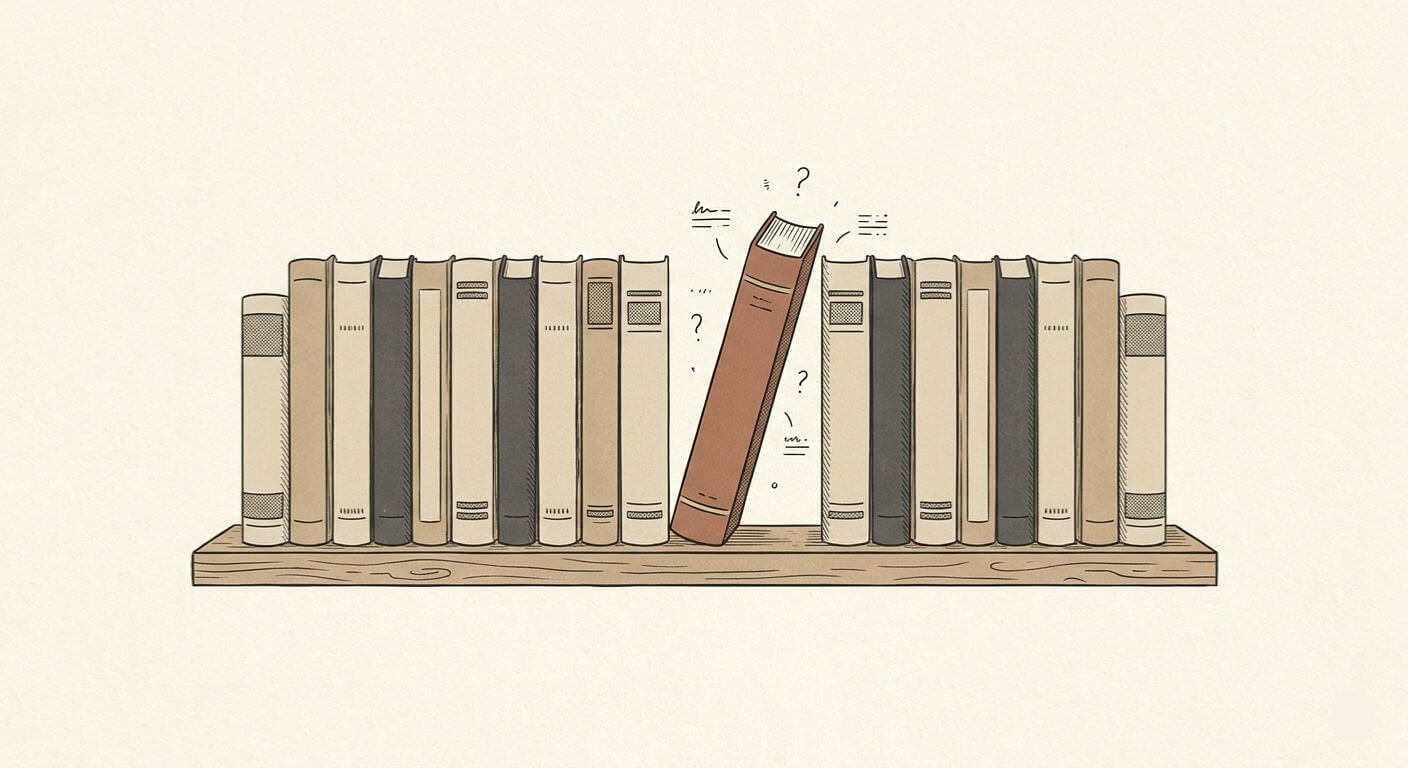
You start noticing that your content sounds a little like everyone else’s. Pleasant and smooth around the edges in a way that makes it hard to remember who said what.
Your brand voice, once a little strange in a good way, starts to average itself out.
You can still publish every day, maybe even more often than before, but the feeling behind the publishing changes. It no longer seems like you are saying something. It seems like you are filling space.
Aware of it, or maybe not yet, you take a strange risk with AI in content marketing. It can produce content that is competent enough to pass. Competent enough to be ignored. Competent enough to look strategic while slowly dissolving the very differences that made your brand worth noticing in the first place.
You may not feel the loss right away, because at first the numbers might not punish you. Traffic can still come in and the workflow can still feel efficient.
Speed without perspective is just a faster way to arrive at the same place as everyone else. And that place, in content, is often the swamp of interchangeable advice.
If your best customer could not tell whether your content was written by you or by some decent AI trained on the open internet, that might feel flattering at first. It means the writing is clean and professional.
But it also means your real value may not be showing up on the page. It may be buried in the nuance that makes a buyer think, yes, this person actually understands my world.
Content is often the first version of your positioning and your point of view. It is where people decide whether you are a generic option or a meaningful one. It is where they infer whether you have thought deeply enough to be worth paying for.
When your content is generic, you start sounding replaceable in a way that makes buyers hesitate. Why pay more for something that feels available everywhere?
You do not usually notice pricing power leaving through a blog post. But it can.
AI makes it easy to confuse remixing with thinking.
It can gather what is already common, rearrange it neatly, and present it in a tone that sounds informed. Did this content change how a buyer thinks, or did it merely occupy their attention for a few minutes? If the answer is the second one, you may be producing volume, but not value.
You can let AI help with filler (definitions, formatting). The less your content is tied to your actual leverage in the market, the safer it is to delegate. But the moment a piece starts shaping perception, the moment it begins to define how people understand your expertise, your difference, that is where human judgment has to stay in the room.
If this is speaking to you, I’ll send the next one when it’s ready.
Every generic how-to, every content cluster assembled from the same public information is, in a sense, communal material. You are feeding the same ecosystem that everyone else is feeding. You are helping make the internet more reusable and less distinct.
The more average your content is, the easier it is for someone else to borrow the shape of it. The more context you strip away, the more portable your ideas become. Sometimes, portability is just a nicer word for leakage.
What You Can’t Afford to Outsource to AI
AI lets institutions and individuals avoid the discomfort of thinking long enough to say something real.
And once a system learns that it can keep producing without pausing to ask whether the work matters, the system starts to hollow out from the inside.
You can see that hollowing in small ways at first. In meetings where the set goal is “content volume” instead of clarity. In briefs that replace insight. In editorial calendars filled with safe topics no one really believes in. In the slow disappearance of voice. In the way everyone starts sounding helpful and no one sounds memorable.
Maybe the most unsettling part is how good this can feel in the short term. Shiny new toy syndrome is not just a cliché here; it is the engine. The tool feels magical because it removes friction. It gives you the sense that you are finally keeping up. It makes the work look modern.
Once the novelty passes, you may be left with a mountain of content that never really paid for itself in differentiation or long-term reputation.
You may have spent money to produce the appearance of authority while diluting the real thing.
And then what?
Then you have to rebuild. Usually slower than you hoped. Usually with more skepticism from the market than you expected. Usually by reintroducing the parts AI could not fake in the first place: lived experience, specific opinions, a human face, a willingness to say something a little risky, a willingness to stand behind a claim instead of merely summarizing what others have already said.
It’s possible to rebuild, but it will not be painless. Perception lags behind correction. People remember the tone you trained them to expect.
You don’t have to wonder whether or not AI can be used in content marketing. It already is, and probably will be even more. The question is what you are protecting while you use it. Because the content layer is uniquely exposed. It is visible. It is easy to automate. And it is often the part of your business where trust and pricing power are made or lost.
In a world where anyone can sound smart, people will search for the ones who sound real.
In a feed full of summaries, they will look for receipts. In a market flooded with polished sameness, they will gravitate toward conviction and specificity. Originality may start to feel like a premium because sameness will be everywhere.
AI is seductive because it makes immediate life easier. But day to day, what gets easier for you can become flatter for everyone else. Fewer original ideas. More noise in the channels people already struggle to trust. A culture of constant publishing with less reason to listen. And if that sounds too large to blame on marketing alone, maybe it is. Still, marketing is where a lot of culture rehearses itself first.
You can keep using the tool, but perhaps more carefully than the hype would like. Let it help with the mechanical parts, let it accelerate what is already known. But do not confuse that with thought. Do not hand over the work that defines your point of view. Do not let the machine become the author of your difference.
Because once your content sounds like everyone else’s, the market stops learning who you are. And when that happens, you are no longer building a brand so much as maintaining a presence.

Rox Jibotean
Writer & Editor, Beyond Chit-Chat
I write about the space between what the digital shows us and what people are actually experiencing, and how things begin to reveal themselves when you learn to see both at once.
@rox.jibotean on IG →